|
Here is your copy of the latest issue of the newsletter. Enjoy! ͏ ͏ ͏ ͏ ͏ ͏ ͏ ͏ ͏ ͏ ͏ ͏ ͏ ͏ ͏ ͏ ͏ ͏ ͏ ͏ ͏ ͏ ͏ ͏ ͏ ͏ ͏ ͏ ͏ ͏ ͏ ͏ ͏ ͏ ͏ ͏ ͏ ͏ ͏ ͏ ͏ ͏ ͏ ͏ ͏ ͏ ͏ ͏ ͏ ͏ ͏ ͏ ͏ ͏ ͏ ͏ ͏ ͏ ͏ ͏ ͏ ͏ ͏ ͏ ͏ ͏ ͏ ͏ ͏ ͏ ͏ ͏ ͏ ͏ ͏ ͏ ͏ ͏ ͏ ͏ ͏ ͏ ͏ ͏ ͏ ͏ ͏ ͏ ͏ ͏ ͏ ͏ ͏ ͏ ͏ ͏ ͏ ͏ ͏ ͏ ͏ ͏ ͏ ͏ ͏ ͏ ͏ ͏ ͏ ͏ ͏ ͏ ͏ ͏ ͏ ͏ ͏ ͏ ͏ ͏ ͏ ͏ ͏ ͏ ͏ ͏ ͏ ͏ ͏ ͏ ͏ ͏ ͏ ͏ ͏ ͏ ͏ ͏ ͏ ͏ ͏ ͏ ͏ ͏ ͏ ͏ ͏ ͏ ͏ ͏ ͏ ͏ ͏ ͏ ͏ ͏ ͏ ͏ ͏ ͏ ͏ ͏ ͏ ͏ ͏ ͏ ͏ ͏ ͏ ͏ ͏ ͏ ͏ ͏ ͏ ͏ ͏ ͏ ͏ ͏ ͏ ͏ ͏ ͏ ͏ ͏ ͏ ͏ ͏ ͏ ͏ ͏ ͏ ͏ ͏ ͏ ͏ ͏ ͏ ͏ ͏ ͏ ͏ ͏ ͏ ͏ ͏ ͏ ͏ ͏ ͏ ͏ ͏ ͏ ͏ ͏ ͏ ͏ ͏ ͏ ͏ ͏ ͏ ͏ ͏ ͏ ͏ ͏ ͏ ͏ ͏ ͏ ͏ ͏ ͏ ͏ ͏ ͏ ͏ ͏ ͏ ͏ ͏ ͏ ͏ ͏ ͏ ͏ ͏ ͏ ͏ ͏ ͏ ͏ ͏
Institute of Ecological Agriculture Co-operativeIEA Newsletter | November 2025
|
EditorialThe viewpoint we wish to highlight in this issue is based on The 2025 state of the climate report: a planet on the brink by Canadian, William Ripple and 15,800 scientists from all parts of the globe.
|
|
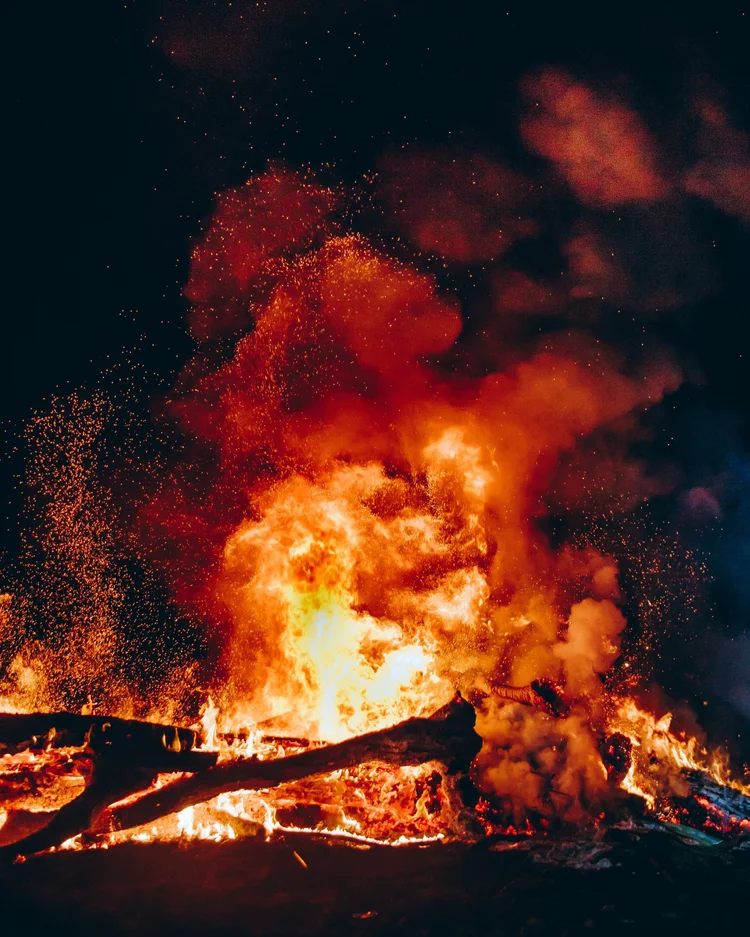
Here in Australia the Liberal and National Parties have problems with two words, net zero, at a moment in time when 15,800 scientists have issued a strong warning about the dangers of not doing enough to minimise the damage associated with climate change. It is as though those who make it their business to know about climate change are preaching to those who cannot see past their limited worldview, and don’t wish to do anything major because other countries aren’t either. Climate change is undoubtedly the biggest, most awkward to manage problem the residents of planet Earth have ever encountered. For us, denial is not the solution; having courage coupled with vision is. And yes, we may have to live outside our comfort zone to achieve a stable climatic system. Here are a couple of paragraphs which are introductory to the report: “We are hurtling towards climate chaos. The planet’s vital signs are flashing red. The consequences of human-driven alterations of the climate are no longer future threats but are here now. This unfolding emergency stems from failed foresight, political inaction, unsustainable economic systems and misinformation. Almost every corner of the biosphere is reeling from intensifying heat, storms, floods, droughts or fires. The window to prevent the worst outcomes is rapidly closing. In early 2025, the World Meteorological Organization reported that 2024 was the hottest year on record…. These recent developments emphasize the extreme insufficiency of global efforts to reduce greenhouse gas emissions and mark the beginning of a grim new chapter for life on Earth.
|
“In this report we seek to speak candidly to fellow scientists, policymakers, and humanity at large. Given our roles in research and higher education we share an ethical responsibility to sound the alarm about escalating global risks and to take collective action in confronting them with clarity and resolve. We show evidence of accelerated warming and document changes in Earth’s vital signs.”
|
The Institute’s newly announced Calvin Muller Regenerative Agriculture Scholarships
Through a very generous grant offered by Calvin Muller, the IEA is able to offer annual scholarships of up to $50,000 per scholar to develop their ecological agriculture knowledge and experience.
The scholarship program is aimed at supporting people in the practice, management, and science of building healthy soils, healthy plants, and healthy people. This initiative will enable participants to tailor their programs to align with each one’s learning styles, needs and aspirations. Recipients will have the cost of their chosen education pathways covered by the scholarship. This may include but is not limited to: short industry-based course enrolment fees, university bachelor/masters/PhD degree “top ups” (after Government contributions), and conference and forum attendance fees.
What is unique about this program is that scholars are mentored over the course of their studies by an IEA Education Committee member and provided with on-the-ground paid work experience with regenerative farmers and IEA members across Australia. Five individual scholarships are available in total with one scholarship being awarded annually for the next five years. Each scholar will have three years to utilise their $50,000 budget. Refer to the Application Guidelines and Terms and Conditions document linked at the bottom of this item. The wellspring of the scholarship program…
|
|
Calvin Muller is a retired broadacre farmer from the Wimmera–Southern Mallee region of Victoria. He is committed to regenerative agriculture and associated practices to improve soil health and landscape function. Calvin was brought up on a wheat and sheep family farm near Warracknabeal. In later years medic clover was introduced along with a three-year rotation boosting natural nitrogen. In 1997, Calvin started introducing direct drilling of crops, followed up with planting multi-species green manure crops. This program was highly successful in that nitrogen fertiliser was not required for the next 30 years. Why is Calvin offering this scholarship? Over the past 30 years, the soils in the Wimmera–Mallee region of Victoria have lost almost all their soil life and have developed a hard pan at 40-50 cm. The penetration of crop roots and rainfall is extremely limited. The systematic use of chemicals and artificial fertilisers is becoming uneconomic. Soil organic carbon levels are well below 10% in the region. Arising from this lived experience, Calvin’s aim is to help restore soil health through the launch of this scholarship. The intended purpose of the Calvin Muller Scholarship is to minimise the use of weed control chemicals, nitrogen-based fertiliser products and other chemicals currently used in conventional farming, in order to regenerate and restore landscapes, whilst maintaining crop yields and nutrient levels for healthy food.
|
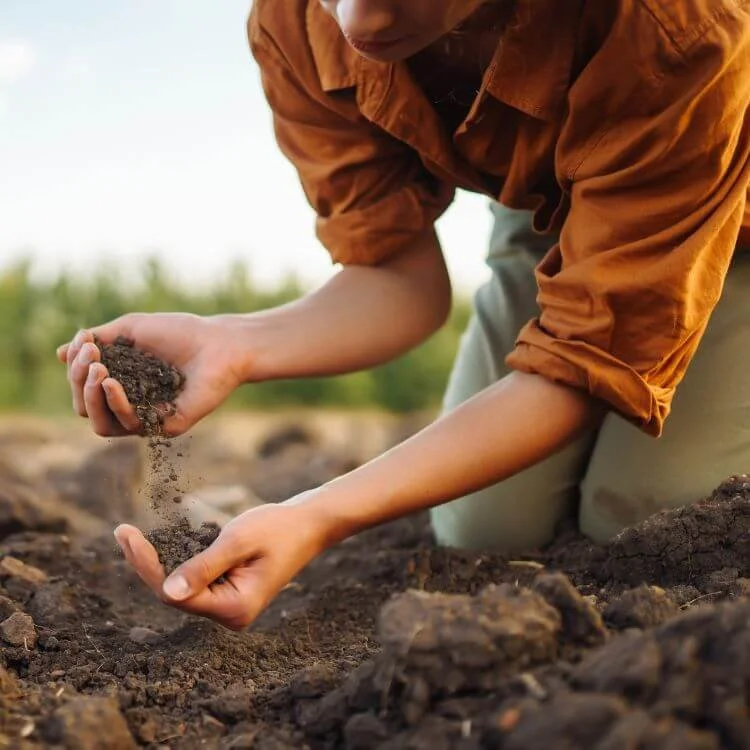
The most critical cause of climate change and its solution – a video resourceby Danielle Enblom, Regeneration International Soil is a vital element in addressing climate change. We have the power to make a real impact by changing farming and consumption practices by choosing to practise, promote and support regenerative practices. The degradation and loss of soil organic matter (SOM) and deforestation have significantly increased atmospheric CO₂ levels since the Industrial Revolution. Industrial agricultural practices have led to substantial SOM loss, releasing vast amounts of CO₂. Implementing regenerative agriculture can restore SOM, sequester carbon, and mitigate climate change. Soil holds more carbon than land vegetation and the atmosphere combined, making its management crucial in addressing global warming.
|
|
|
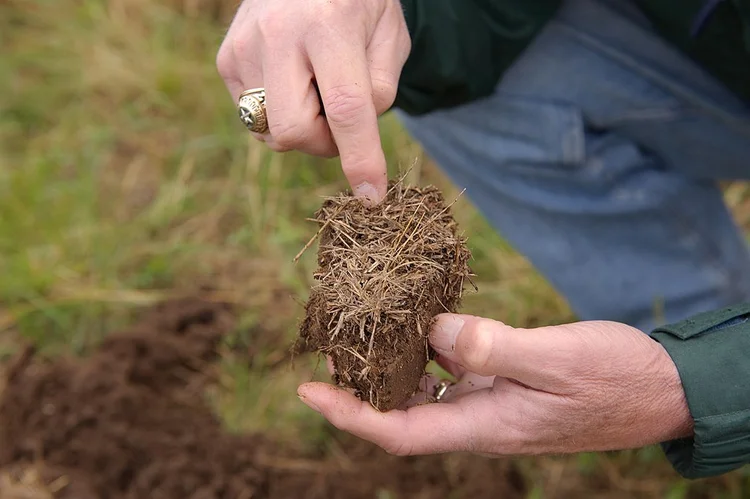
Ground cover and litter create soil organic matter, which is an essential part of soil health. USDA NRCS Texas, Public domain, via Wikimedia Commons |
|
The soil carbon spongeOn 1 November 2025, Nourishing Australia ran an online conference on matters pertaining to growing food in a world beset with climate change. Speakers addressed the importance of providing nutrient-dense food. The speakers on soil carbon included soils experts Walter Jehne and Phil Mulvey, and NSW farmers Martin Royd, Glen Morris and Stuart Andrews. A feature of the farmer talks and also that of the scientists was not so much about CO₂ emissions but about the importance of retaining soil water. Walter Jehne, ex-CSIRO, soils specialist, climate scientist and microbiologist, spoke about the importance of the soil carbon sponge and its capacity to hold water and prevent runoff. Jehne illustrated what happens when heavy rain falls on soil with low carbon and now much of the precious water runs off into waterways and ultimately out to sea. By increasing the soil carbon to a level of 3% which can be achieved within five years, he believes, the soil is able to hold onto the water in what he calls the soil carbon sponge. This gives longevity to plant growth and puts a brake on soil desertification. Ultimately, this has a far greater impact on the capacity of the soil to sequester carbon from the atmosphere. Farmers Royd, Morris and Andrews then spoke about what they are doing on their farms to ensure that water is held in the landscape and how this procedure has had such an impact on their farm production systems.
|
The IEA AGM The Board of the IEA remains largely the same as in the previous year following the AGM held recently. The Executive includes Ethan Gordon (President), Bernard Callus (Vice President and Education Portfolio Leader), Jono Forrest (Treasurer) and Jen Ringbauer (Secretary). The Board includes Executive members plus Katharine Brown (Accreditation Coordinator), Bernice Hookey (Indigenous), Rachelle Armstrong, Kalista Bolton, Lorraine Gordon and Kerry Cochrane. Nathan Strawbridge did not stand again after two years managing membership services for the Institute. We strongly thank Nathan for his contribution.
|
Newsletter Christmas breakThe newsletter takes a break over the December-January period and will return in February 2026 with more stories about ecological ways of being, including farming. If you have a story or know of a good story that others might benefit from, please make contact with the IEA (kcochrane@ecoag.org.au).
|
Sharing the good oil!The IEA Newsletter seeks to circulate more widely. We offer a timely and emergent view on agriculture. Do help the organisation to grow by circulating it to anyone you believe might be interested in its focus, and those who may not yet have commenced the journey but may be intrigued to do so. If you would like to receive the free newsletter go to our website (www.ecoag.org.au), click on Resources and then Newsletter and request a copy. If you would like to become a member of the Institute, go here: https://www.ecoag.org.au/membership.
|
|
Editor: Kerry Cochrane
Design & presentation: Tony McKenzie
|
|
|
|