|
Here is your copy of the latest issue of the newsletter. Enjoy! ͏ ͏ ͏ ͏ ͏ ͏ ͏ ͏ ͏ ͏ ͏ ͏ ͏ ͏ ͏ ͏ ͏ ͏ ͏ ͏ ͏ ͏ ͏ ͏ ͏ ͏ ͏ ͏ ͏ ͏ ͏ ͏ ͏ ͏ ͏ ͏ ͏ ͏ ͏ ͏ ͏ ͏ ͏ ͏ ͏ ͏ ͏ ͏ ͏ ͏ ͏ ͏ ͏ ͏ ͏ ͏ ͏ ͏ ͏ ͏ ͏ ͏ ͏ ͏ ͏ ͏ ͏ ͏ ͏ ͏ ͏ ͏ ͏ ͏ ͏ ͏ ͏ ͏ ͏ ͏ ͏ ͏ ͏ ͏ ͏ ͏ ͏ ͏ ͏ ͏ ͏ ͏ ͏ ͏ ͏ ͏ ͏ ͏ ͏ ͏ ͏ ͏ ͏ ͏ ͏ ͏ ͏ ͏ ͏ ͏ ͏ ͏ ͏ ͏ ͏ ͏ ͏ ͏ ͏ ͏ ͏ ͏ ͏ ͏ ͏ ͏ ͏ ͏ ͏ ͏ ͏ ͏ ͏ ͏ ͏ ͏ ͏ ͏ ͏ ͏ ͏ ͏ ͏ ͏ ͏ ͏ ͏ ͏ ͏ ͏ ͏ ͏ ͏ ͏ ͏ ͏ ͏ ͏ ͏ ͏ ͏ ͏ ͏ ͏ ͏ ͏ ͏ ͏ ͏ ͏ ͏ ͏ ͏ ͏ ͏ ͏ ͏ ͏ ͏ ͏ ͏ ͏ ͏ ͏ ͏ ͏ ͏ ͏ ͏ ͏ ͏ ͏ ͏ ͏ ͏ ͏ ͏ ͏ ͏ ͏ ͏ ͏ ͏ ͏ ͏ ͏ ͏ ͏ ͏ ͏ ͏ ͏ ͏ ͏ ͏ ͏ ͏ ͏ ͏ ͏ ͏ ͏ ͏ ͏ ͏ ͏ ͏ ͏ ͏ ͏ ͏ ͏ ͏ ͏ ͏ ͏ ͏ ͏ ͏ ͏ ͏ ͏ ͏ ͏ ͏ ͏ ͏ ͏ ͏ ͏ ͏ ͏ ͏ ͏ ͏
Institute of Ecological Agriculture Co-operativeIEA Newsletter | February 2026
|
Editorial:
A potted history of the IEAThe Institute of Ecological Agriculture Cooperative (IEA) returns to your inbox after a break of several weeks with news of matters ecological (regenerative). Before looking at some of the initiatives anticipated this year, it would be useful to document the critical initiatives that led to the IEA’s emergence and explain the link between ecological and regenerative in the context of the Institute. Here are several significant chapters in the story of the IEA, which begins in the days of the Orange Agricultural College. In 1974, the College began graduating students especially educated in farm and horticultural business management, but also students who had specialised in land management, farm secretarial studies, and equine management:
|
Orange Agricultural College officially became part of the University of Sydney on 1 January 1994. Previously linked with the University of New England (1990–1994), the College operated under the University of Sydney until it was transferred to Charles Sturt University on 1 January 2005. In 1999 the Bachelor of Land Management (Ecological Agriculture) was approved by the Board of Studies at the University of Sydney. The initiative arose from several academics at the Faculty of Rural Management (FRM) who expressed the view that agricultural education needed to change and embrace an ecological foundation stone. The degree eventually became known as the Bachelor of Ecological Agricultural Systems. In 2008 the Ecological Agriculture Australia Association (EAAA) was formed as a mechanism for providing a community support base for students and graduates. This moment was captured in the photo below which was taken on the sporting field on the Orange campus.
|
In 2015 student Susan Hill completed a research program to determine the strength of support for the Association becoming a Cooperative, and for the new entity becoming an institute. There was overwhelming support for the two initiatives. On 17 October 2016, the Australian Institute of Ecological Agriculture Cooperative Ltd began its life. The term regenerative was hardly known in 2016 but it started to emerge in conversations in Australia from 2020 onwards. The Institute often refers to the words regenerative and ecological as being equivalent since it is impossible to be regenerative unless one is ecological. We often depict this connection as follows: ecological (regenerative) agriculture. The IEA is run by a Board of 11 from all parts of Australia with one position dedicated to a First Nations representative. We meet by Zoom once a month in late afternoon on the first Monday of the month. Our major initiatives include an accreditation program and an education program. We also offer scholarships and details of this appear later in this edition. Importantly the Institute is open to all for the price of $62 per year, and to receive our newsletter all you need to do is go to https://www.ecoag.org.au/newsletter and enter your email address.
|
|
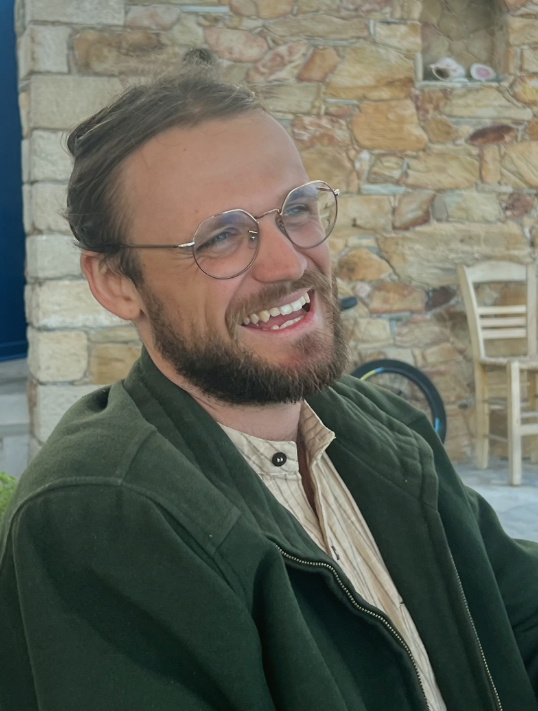
Our President is Ethan Gordon from Ebor in the NSW Northern Tablelands. Here are Ethan’s thoughts on the Institute and what lies ahead: It has been an exciting journey since the formation of the Australian Institute of Ecological Agriculture. This has not been without its challenges, but the years have also been full of exciting opportunities. I became involved with the Institute in 2019 when it was working with Southern Cross University to develop the Bachelor of Science (Regenerative Agriculture). At the time, I was undertaking my PhD in regenerative agriculture at the University of Technology Sydney. I joined forces with the Institute to help launch the accreditation program for educators and consultants. In 2025, we welcomed nine accredited members, with more waiting in the wings and ready to go in 2026. We’ve had some great wins over the past two years. We recently became a registered charity open for tax deductible donations – a long administrative process, but one that helps our cause. I’m particularly proud of the unanimous decision by our membership to reserve a position on the board for an Indigenous person. The Institute advocates ecological and holistic approaches that have their origins in the knowledges, values, and practices of Indigenous cultures all over the world. So, it’s an honour to have Indigenous representation in our governance. Proud Waanyi Jibardi woman, Bernice Hookey, was elected for a second term at our recent AGM as the First Nations Director, supporting pathways for Aboriginal and Torres Strait Islander people in agriculture. In 2026, we are moving full steam ahead with the Calvin Muller Scholarship. Through the generous commitment by Calvin Muller, the Institute can offer annual scholarships of up to $50,000 per scholar to develop their regenerative agriculture knowledge and experience. The scholarship is custom designed and tailored to the individual applicants’ learning styles, needs and aspirations. Alongside Calvin himself, our education committee – Dr Bernard Callus, Dr Lorraine Gordon, and Kerry Cochrane – have been working tirelessly through January interviewing applicants. I’m very thankful to them for all their work and congratulations to the successful candidate for 2026. There is a lot in the pipeline this year, and we’re hosting bi-monthly webinars on a diverse range of topics relating to regenerative agriculture. So please look out for those across our website, newsletter, and socials. If you’re yet to sign up as a member, now is a good time to make the most out of these opportunities! Have a wonderful 2026.
|
|
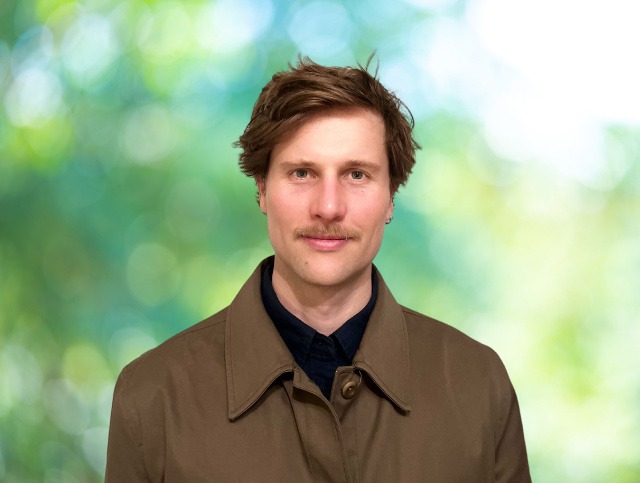
IEA news continued The Calvin Muller Scholarship winner announcedIn the inaugural call for applicants the Institute received 18 expressions of interest for the scholarship. Of these, eight were short listed for interview. From these eight, two were selected and finally, after much discussion, a winner was chosen. That person is Luke Richards. Here is a brief account of what Luke proposed to us. Luke is a former civil engineer turned soil health advocate, currently Head of Product at Downforce Technologies, a world-leading developer of soil health and natural capital monitoring technology. Over the past four years at Downforce, he has led product development and farmer engagement across the Australian and US regenerative agriculture sectors, building digital tools that help farmers monitor soil health and navigate a transition toward regenerative practices. Prior to Downforce, Luke worked across the non-profit and social enterprise sectors, developing citizen science tools for biodiversity tracking at Earthwatch Institute and leading circular economy initiatives at Reground to divert organic waste to support soil health and landscape regeneration with local growers. He holds a Master of Environment and Sustainability from Monash University, where his research focused on cost-effective soil health sensor technology in partnership with Parks Victoria and Bush Heritage Australia, in consultation with the Dja Dja Wurrung traditional owner group. Luke is a recipient of the Bill Borthwick Scholarship and the Parks Victoria Research Partners Panel Scholarship and has presented at the International Conference on Sustainable Development during New York Climate Week. His personal mission is to see soil health and natural capital appropriately valued in farmland appraisals, so that growers are rewarded for their long-term commitment to good stewardship and can borrow against the value they have added to the land. His dream is to one day own a small plot in central Victoria with his partner Megan and put these ideas into practice.
|
|
Luke explains how he intends to use the scholarship: Through this scholarship, I want to explore the structural barriers preventing soil health and natural capital improvements from being recognised in farmland valuation and insurance, two critical levers that could accelerate regenerative agriculture adoption across Australia. But I also want to listen. Already through my work I regularly speak with farmers navigating the transition to regenerative practices, but I want to use this opportunity to go deeper, to understand directly from the farming community what they would like to see changed and what support would make the biggest difference. Beyond the financial structures, I'd like to investigate the behavioural barriers that may prevent wider adoption, even when the economics improve. My previous work at Reground applied behavioural science principles to drive participation in circular economy initiatives, and I'd like to bring that lens to regenerative agriculture, understanding what motivates lasting practice change on farm. I want to use this scholarship to attend workshops, engage with actors across farming, finance, research and government, and translate what I learn into community-led solutions.
The Board of the IEA congratulates Luke for winning in what was an impressive field. About the scholarship. Calvin Muller is a retired broadacre farmer from western Victoria who created the scholarship because of his concern about the fertility of the soils in the Wimmera region. He believes that the application of chemicals has robbed soil of its fertility. The scholarship, worth $50,000, will be offered again towards the end of 2026. Four more scholarships will be offered over the next four years. To avoid missing the moment it Is important to keep track of events via the IEA Newsletter.
|
News of farming and farmers
|
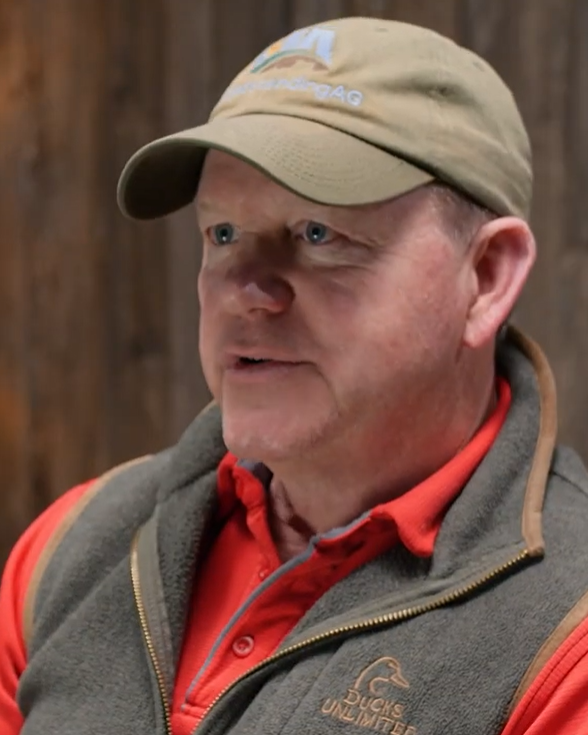
The Wilmot Field Days will be held on the 4-5 March. For details refer to https://wilmotfieldday.com.au. Speaking at the field days will be regenerative farmer Allen Williams from California. In the article linked below Allen explains the critical role of livestock in the landscape and the risks of a 100% plant-based system. As Allen explains, when you take cattle off, you have to put fertiliser on … and that is bad in an epoch of climate change. The issues raised are of central importance for regenerative agriculture.
|
Do it. Do it as rapidly as you can, but first educate yourself. Nobody can do what they are not familiar with. If you haven’t studied engineering, you can’t perform as an engineer tomorrow. Same thing with regenerative agriculture. You have to educate yourself. Farming regeneratively is not a formula or a recipe, and most farms and ranches are looking for just that. Most farmers are looking for that because they've become used to it. The real answer to that is it depends on the year, where you are in your soil health profile, your current goals and objective, what you have available to you, your context. Do not look for a formula or recipe or you will be making one of the most profound mistakes people make in agriculture. We call what we do adaptive stewardship. If you’re going to be regenerative, you must be adaptive. You must be because we're farming in the real world. In the real world nature has control, not us. We do not know from any given point in time what's going to happen, so we have to be able to flex and adjust and change according to what nature is presenting to us and according to our ultimate goals and objectives. Your cover crop mixes will change and alter each year, and they should. The way you plant will depend on conditions and timing … There is no one answer, and we don’t give one, and we caution people do not give one. Inevitably, if you do the same thing year in year out, it will quit working. It will not work the same year in and year out. Network yourself with other farmers and ranchers who are doing this and have already made the transition so you can learn from them. Learn their problems and how they overcame those problems. Go visit other farmers and ranchers that have made this transition. It’s no different than learning anything else. If you want to learn something, you’ve got to go to the resources where you can learn this stuff. You’ve got to be willing to take some time to truly educate yourself and part of that means getting off of your farm.
|
|
If you haven’t read the most recent Soils for Life newsletter yet it contains plenty of food for thought. You’ll find the newsletter here. Time now to look over the fence to see what others are doing. A brief story this edition comes from Texas USA on the effect that ground cover has on soil temperature. Thanks Grassroots Carbon website. Click on the video Ranch Stories – James Clement & Rancho Juntos; duration: 2 mins 44 secs. Meanwhile, an Australian organisation, The Food Network, has produced a most informative set of videos on soils. It would be well worth bookmarking it for ongoing reference. Access these resources here.
|
Sharing the good oil!The IEA Newsletter seeks to circulate more widely. We offer a timely and emergent view on agriculture. Do help the organisation to grow by circulating it to anyone you believe might be interested in its focus, and those who may not yet have commenced the journey but may be intrigued to do so. If you would like to receive the free newsletter go to our website (www.ecoag.org.au), click on Resources and then Newsletter and request a copy. If you would like to become a member of the Institute, go here: https://www.ecoag.org.au/membership.
|
|
Editor: Kerry Cochrane
Design & presentation: Tony McKenzie
|
|
|
|